
Brush hogging — also called bush hogging, brush cutting, or rough mowing — uses a heavy rotary cutter mounted on a skid steer to mow down overgrown grass, weeds, briars, and light brush quickly and efficiently. It’s the fastest and most cost-effective way to reclaim overgrown fields, pastures, fence lines, and rural lots that have grown up in briars and saplings. Some folks call it field mowing or bush hogging; around here it usually means knocking down brush a regular mower can’t touch.
At Solid Ground, we run an 84-inch Virnig V50 high-flow open-front brush cutter — cutting brush and small trees up to 6 inches in diameter — capable of clearing 4–5 acres per day on average — significantly faster than forestry mulching, and at a lower day rate for the right type of property.
If you’re unsure whether brush hogging or forestry mulching is right for your property, see our full comparison on the forestry mulching page →
Folks call this job different things — brush mowing, pasture mowing, field mowing, rough-cut mowing, bush hogging. It’s all the same work: a heavy rotary cutter knocking down growth a finish mower can’t handle. If your field has gone a season or two without being cut and the grass has turned to briars, hedge sprouts, and waist-high weeds, that’s brush mowing, and it’s what we do most days from spring through late fall.
Where we’re the right call is when the ground is rough, the growth is woody, or there’s stuff hiding in it you don’t want to hit with a tractor. If it’s clean grass and you just need it mowed, a neighbor with a batwing will do it cheaper — we’ll tell you that on the phone.
Our own photos, our own machine, mid-job and finished.
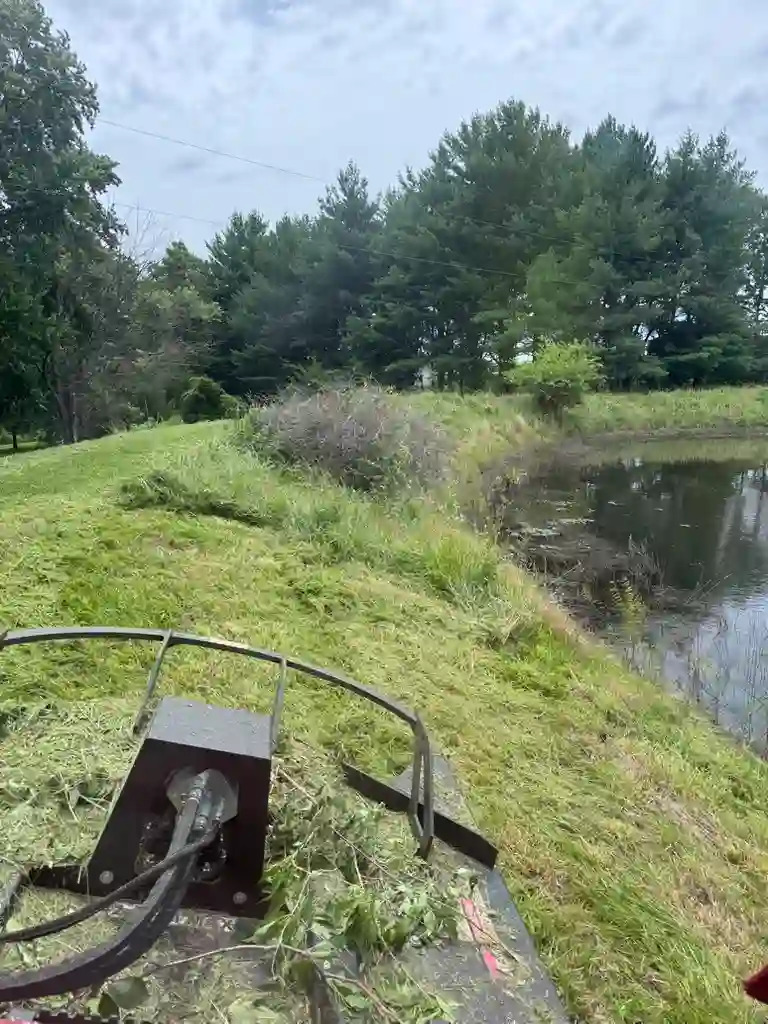
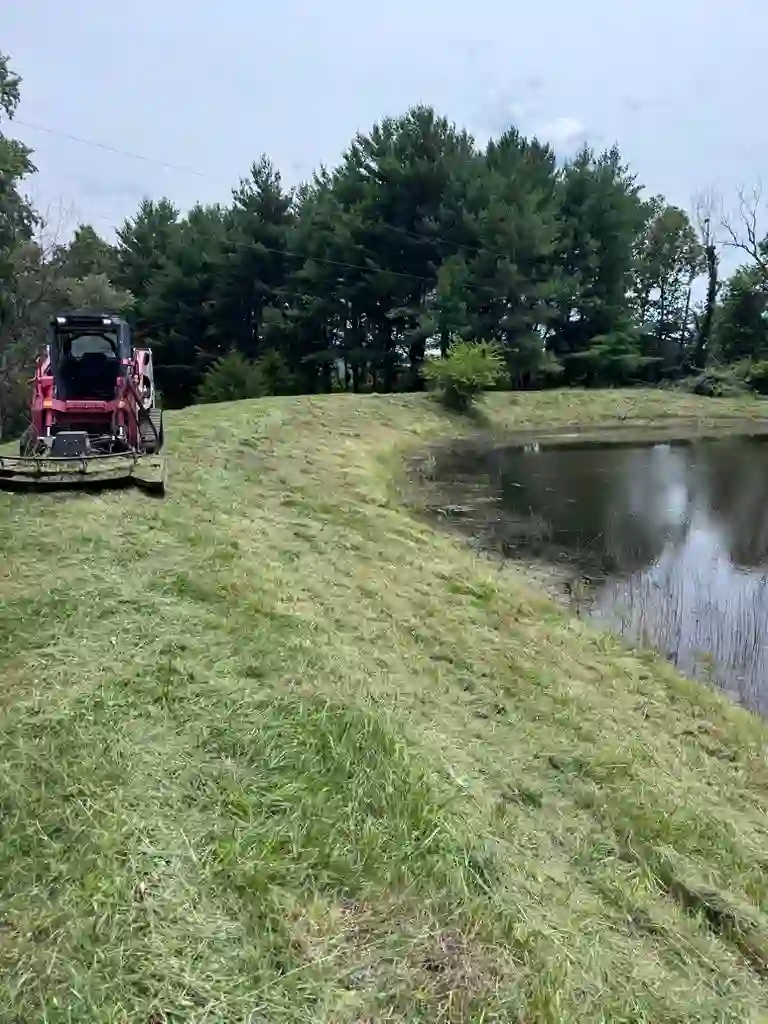
This Lone Jack property had two one-acre ponds, and both dams had grown up in brush, briars, and small saplings on the inside slope, right down to the water. That’s the kind of growth you don’t want on a dam: woody roots work into the fill, you can’t see muskrat holes or wet spots, and once the sprouts turn into trees it stops being a mowing job. We ran the 84-inch cutter down the slopes and along the waterline on both ponds and left them clean enough to walk and inspect. Both dams, one day, one trip.
Pond dams, spillways, pond banks, and waterway edges are a regular call for us — the track loader handles the slope and the cutter runs tight to the water without tearing up the bank. If yours has gotten away from you, call or text 816-316-0261 or send a photo.
Reclaim fields overtaken by tall grass, weeds, and light brush. Fast coverage means you’re back in business in a day.
Keep fence lines clear, maintain field edges, and control invasive vegetation across working farm ground.
Open up trails, driveways, and road shoulders that have been reclaimed by vegetation over the season.
Dense dry vegetation is a fire hazard. Regular brush hogging keeps growth manageable and your property safer.
Clear surface vegetation before excavation or grading work begins — faster and cheaper than starting with heavy equipment.
Got a notice about overgrown vegetation on land you own or inherited? Rural lots, old homesteads, and family ground that sat for a few years are common calls. We knock it back fast, before it becomes a bigger job.
Not sure which service is right for your property? Here’s the honest breakdown.
Not sure which is right for you? Call us and we’ll tell you straight. Learn more about forestry mulching
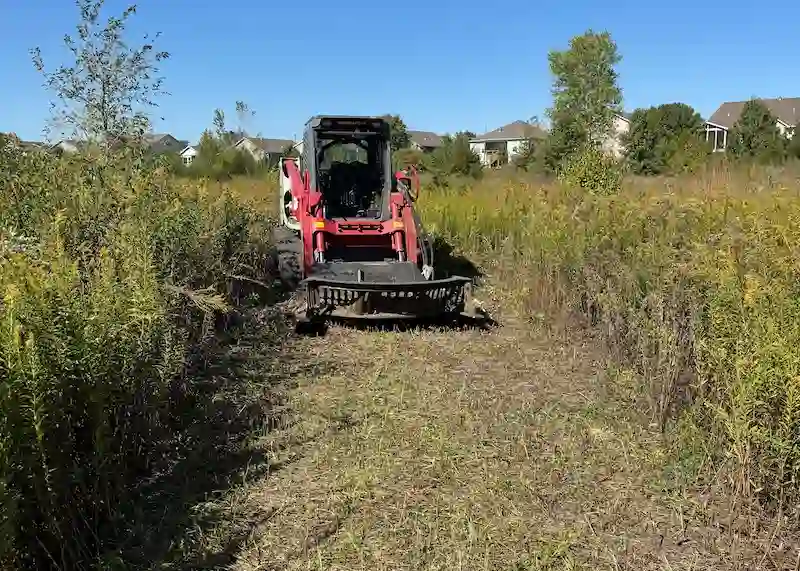
We charge $1,600 to $2,000 per day for brush hogging services. At 4-5 acres per day, most residential and small farm jobs are completed in a single day.
Every quote is free. We look at your property, give you a realistic timeline and price, and only start when you’re ready. No surprises on the invoice.
Jackson County: Kansas City · Blue Springs · Grain Valley · Lone Jack · Oak Grove · Independence · Lee’s Summit Cass County: Harrisonville · Pleasant Hill · Raymore · Garden City · Belton Lafayette County: Odessa · Bates City · Higginsville · Concordia
We operate within approximately 50 miles of Grain Valley, MO. Don’t see your town? Call us.
Brush hogging — also known as bush hogging, rotary cutting, or rough mowing — uses a heavy-duty rotary cutter on a skid steer to cut through thick grass, weeds, briars, and light woody brush that a regular mower can’t handle. It’s designed for rough, overgrown terrain — not maintained lawns.
Yes — this is one of the most common reasons people call us. If you’ve received a city or county notice requiring you to clear overgrown brush or weeds on a vacant lot or property, we can usually get there quickly and get it done in a day. Call us and we’ll move fast to help you meet the deadline.
Our rate is $1,600 to $2,000 per day. At 4-5 acres per day most small to mid-size jobs are a single day’s work. We provide free on-site quotes so you know exactly what to expect before we start.
Not necessarily — brush hogging cuts at the surface but leaves roots intact, so some vegetation will regrow over time. For permanent removal of woody brush and trees, forestry mulching is the better choice since it grinds stumps and roots down to ground level.
On average, we cover 4-5 acres per day with our brush hog setup. Rougher terrain, thick briars, or wet ground can slow that down. We’ll give you a realistic estimate after seeing your property.
Yes — we work for homeowners, farmers, developers, municipalities, and commercial property owners across Jackson, Cass, and Lafayette County. If you have overgrown land, we can help.
Yes, and we’ll tell you straight when we’re not the cheapest way to do it. If it’s clean grass with nothing woody in it, a tractor with a batwing mower can knock out 20 acres in an afternoon for less than our day rate. Where we earn our money is when the field has grown up in briars, saplings, and brush that a regular mower can’t handle. Send us a photo and we’ll point you the right direction either way.
Our 84-inch Virnig V50 open-front cutter handles tall grass, weeds, briars, and woody brush up to about 6 inches in diameter. Established trees, cedar thickets, and dense timber are a forestry mulching job — we do both and will tell you straight which your property needs.
Once or twice a year keeps most pastures and fields in shape. Skip a couple of years and light brush turns woody, and a one-day mowing job becomes a multi-day mulching job. Regular cutting is the cheap version.
Yes. Brush and saplings on a dam are a maintenance problem, not just an eyesore — roots work into the fill and hide leaks. The track loader handles the slope and we cut right down to the waterline. See the pond dam job above.
Call or text Hap at (816) 316-0261 or fill out our online quote request. We’ll schedule a free on-site visit, walk your property, and give you a straight answer on timeline and cost.
“Building Trust on Solid Ground.”
Solid Ground Land and Excavation Services | Grain Valley, MO 64029 | Jackson, Cass, Johnson and Lafayette County
kahap@solidgroundexcavation.com